
Dock Replacement Decking
Upgrade Your Dock with FRP Grating
When a dock reaches the end of its service life, many owners automatically replace the decking with the same material they used before. However, today's dock owners have more options than ever. One of the fastest-growing choices for dock replacement decking is FRP Grating (Fiberglass Reinforced Plastic).
Whether you're replacing decking on a marina, commercial waterfront, municipal dock, or private shoreline structure, FRP grating offers a combination of durability, safety, and low maintenance that traditional materials often struggle to match.
Why Dock Decking Needs Replacement
Marine environments are tough on traditional decking materials. Wood can rot, warp, splinter, and become slippery. Steel can rust, corrode, and require ongoing maintenance. FRP grating offers a modern alternative that is lightweight, corrosion-resistant, slip-resistant, low maintenance, and built for harsh waterfront conditions.
Dock decking is exposed to some of the harshest environmental conditions:
Constant moisture
UV exposure
Freeze-thaw cycles
Saltwater or freshwater corrosion
Heavy foot traffic
Boat impacts and equipment loads
Over time, these conditions can cause traditional decking materials to:
Rot and decay
Warp or crack
Become slippery
Rust or corrode
Require frequent repairs and maintenance
Replacing worn decking presents an opportunity to upgrade to a longer-lasting solution.
What is FRP Grating?
FRP grating is a fiberglass-reinforced composite panel designed for demanding industrial and marine environments.
Unlike wood, steel, or aluminum decking, FRP grating is:
Corrosion resistant
Lightweight
Slip resistant
UV stable
Non-conductive
Virtually maintenance free
These characteristics make it ideal for dock replacement projects where durability and long-term performance are priorities.
Advantages of FRP Grating for Dock Replacement Decking
1. Will Not Rot or Decay
Wood docks naturally absorb moisture. Over time this can lead to:
Rot
Mold growth
Splitting
Insect damage
FRP grating does not absorb water and will not rot, making it particularly effective in wet marine environments.
2. Superior Slip Resistance
Safety is one of the biggest concerns on any dock.
Wet wood, painted surfaces, and smooth metal decking can become hazardous when exposed to rain, spray, algae, or ice.
FRP grating features an integral grit surface that provides excellent traction, helping reduce slip-and-fall risks for:
Marina visitors
Boat owners
Maintenance crews
Commercial users
3. Reduced Maintenance Costs
Traditional dock materials often require:
Staining
Sealing
Painting
Rust treatment
Board replacement
FRP grating typically requires only occasional cleaning, significantly reducing maintenance costs over the life of the dock.
4. Excellent Drainage
Open-mesh FRP grating allows:
Water to drain quickly
Snow to fall through
Debris to wash away
Air circulation beneath the deck
This helps maintain a safer walking surface and reduces standing water.
5. Lightweight Installation
FRP grating weighs substantially less than steel and many traditional decking systems.
Benefits include:
Easier transportation
Faster installation
Reduced labor requirements
Lower structural loading
Many dock owners can replace existing decking without requiring major structural modifications.
6. Long Service Life
FRP grating is widely used in:
Wastewater facilities
Chemical plants
Offshore platforms
Industrial walkways
Marine structures
These demanding applications demonstrate the material's ability to withstand harsh environments for decades.
FRP Grating vs Traditional Dock Replacement Materials
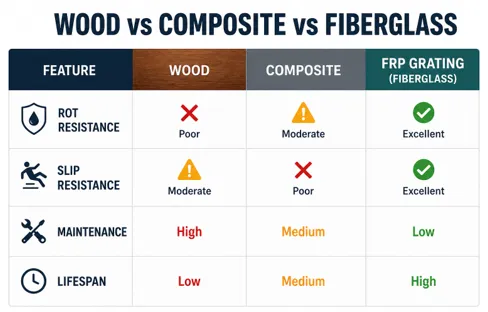
For more and more dock owners, FRP grating delivers the best balance of safety, longevity, and lifecycle cost.
Ideal Applications for FRP Dock Replacement Decking
FRP grating is commonly used for:
Residential Docks
Homeowners appreciate the low maintenance and long service life.
Marina Walkways
Slip resistance and durability make FRP ideal for high-traffic marina environments.
Municipal Waterfront Facilities
Cities and parks departments often seek materials that reduce maintenance budgets while improving public safety.
Commercial Marine Docks
Industrial and commercial facilities benefit from corrosion resistance and structural performance.
Fishing Piers and Boardwalks
Excellent drainage and durability help withstand heavy public use.
Choosing the Right FRP Grating
When selecting FRP grating for a dock replacement project, consider:
- Design loads
- Slip resistance requirements
- Open mesh versus covered panels
- UV exposure
- Environmental conditions
A properly specified FRP grating system can provide decades of reliable service in marine environments.
Frequently Asked Questions
Is FRP Grating More Cost Effective?
While FRP grating may have a higher initial material cost than some wood decking options, the total lifecycle cost is often significantly lower.
Savings can come from:
- Reduced maintenance
- Fewer repairs
- Longer service life
- Faster installation
- Improved safety
When these factors are considered over 15 to 30 years, FRP grating frequently becomes one of the most economical dock replacement decking solutions available.
How long does FRP grating last on a dock?
FRP grating can provide decades of service in marine environments when properly specified and installed. It is highly resistant to moisture, corrosion, and UV exposure.
Can FRP grating be installed on an existing dock frame?
In many cases, yes. FRP grating is lightweight and can often be installed on existing steel, aluminum, or treated wood support structures, provided they remain structurally sound.
Is FRP grating slippery when wet?
No. Most marine-grade FRP grating includes an integrated grit surface that provides excellent traction in wet conditions, making it safer than many traditional decking materials.
Looking for a durable dock replacement decking solution?
Contact DockGrating.com to discuss your project and learn how FRP grating can reduce maintenance, improve safety, and extend the life of your waterfront structure.

Fiberglass Grating for Marine Applications